KDP Interior Reservation Tracker: Ready-to-Print Layout
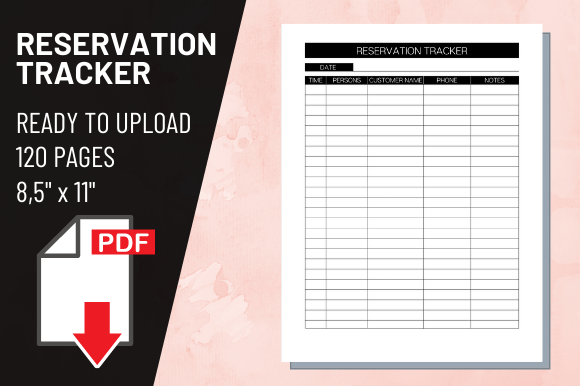
Creating a functional low-content book for Amazon KDP requires more than just a creative cover; the interior experience dictates whether a customer leaves a five-star review or returns the product. The KDP Interior Reservation Tracker is engineered specifically to bridge the gap between digital design and physical utility. This isn't merely a collection of lines on a page; it is a pre-formatted, 120-page system designed at 8.5″ x 11″ with precise margins that account for binding and readability. For publishers and content creators targeting the hospitality, property management, or personal organization niches, this template eliminates the technical friction often associated with self-publishing functional notebooks.
The visual personality of this tracker leans into modern typography principles that prioritize clarity over decoration. When designing interiors for reservation logging, the typeface choices and spatial arrangement function similarly to editorial design. The layout utilizes a clean sans serif font for headers and data entry fields, ensuring high legibility even when printed on standard 55# cream or white paper. This deliberate typographic restraint establishes a professional brand perception immediately upon opening the book. Unlike decorative script fonts that might look appealing on a cover but fail in practical application, this interior focuses on visual hierarchy. Users can instantly distinguish between date columns, guest names, and special notes without cognitive load, which is essential for maintaining consistency in busy environments like front desks or rental properties.
Optimizing Readability and Visual Hierarchy in Print
Readability in a printed tracker differs significantly from web design or social media graphics. On a screen, you have backlights and zoom capabilities; in a physical 8.5″ x 11″ book, you are bound by ink spread and paper texture. This KDP Interior Reservation Tracker addresses these constraints through rigorous 300 DPI resolution. At this density, lines remain crisp rather than pixelated, and text maintains sharp edges. This technical specification matters because blurry interiors signal low quality to buyers. The "no bleed" setting is equally critical. By keeping all elements within the safe zone, the design ensures that no vital tracking fields get swallowed by the gutter during the binding process. This attention to mechanical specifications reflects an understanding of commercial font usage and print production standards.
The structure of the pages influences how users interact with the book. Effective reservation tracking requires a balance of open space for handwriting and structured guidance to keep records uniform. The layout employs generous leading (line spacing) and adequate padding around table cells. This whitespace acts as a passive guide, encouraging neat penmanship and preventing the page from looking cluttered. From a branding perspective, this cleanliness communicates reliability. Whether used by a boutique hotel owner, an Airbnb host, or a restaurant manager, the interior reinforces a sense of organized professionalism. It serves as a tangible extension of their business identity, much like premium packaging design or branded stationery.
Strategic Applications Across Creative and Commercial Projects
Versatility is a key asset for any design asset intended for the KDP marketplace. While labeled a reservation tracker, the underlying grid and list architecture adapts to various use cases. Entrepreneurs and small business owners often repurpose this format for appointment scheduling, inventory logging, or client intake forms. The neutral aesthetic allows it to function across different industries without requiring significant modification. For marketers and bloggers creating lead magnets or bonus content, this PDF provides a high-value resource that aligns with modern minimalist trends. It avoids the overly cutesy style common in some low-content books, making it suitable for corporate clients, male demographics, and serious hobbyists who value function over flair.
- Hospitality Management: Ideal for B&Bs, vacation rentals, and front desk operations requiring daily guest logs.
- Service-Based Businesses: Adaptable for salons, spas, and consultants managing appointment slots and client details.
- Event Planning: Useful for tracking vendor confirmations, venue bookings, and timeline milestones.
- Personal Organization: Serves home users managing household guests, party planning, or club memberships.
- Content Creator Bonuses: A ready-made digital download for audiences interested in productivity and systems.
When evaluating this tracker against other market options, consider the long-term user experience. Many competitors use generic templates with poor margin calculations or low-resolution assets that degrade after printing. This package’s adherence to 300 DPI standards and proper trim sizing ensures the final product feels intentional. For designers considering licensing or reselling rights, the clean construction makes it easier to rebrand. You can overlay your own logo or adjust header fonts without fighting against existing background noise. This flexibility transforms a single purchase into a foundational element of a broader publishing portfolio.
Technical Specifications and Production Best Practices
Understanding the file mechanics helps prevent upload errors and ensures the best possible print result. The included PDF is flattened and optimized for KDP’s automated review systems. At 8.5″ x 11″ with no bleed, the document respects the standard safety margins required for paperback binding. Publishers should avoid resizing this file, as altering dimensions can distort the aspect ratio of tables and text. If you plan to create a series, maintain this exact trim size to foster brand recognition and shelf consistency. Consistency in physical dimensions signals to customers that they are buying into a cohesive system rather than disparate products.
Font pairing considerations extend beyond the interior itself. When designing a cover to match this KDP Interior Reservation Tracker, select display fonts that complement the utilitarian nature of the inside pages. A bold, geometric sans serif or a sturdy slab serif works well to convey durability and order. Avoid delicate handwritten fonts on the cover unless they are highly legible at thumbnail size, as they may clash with the structured interior. Test your cover and interior combination by printing a proof copy before launching. Seeing the physical interaction between the cover stock and the interior paper reveals nuances that screens cannot show. Does the paper opacity allow for double-sided writing? Is the gutter margin sufficient for spiral-bound alternatives if you expand later? These practical observations inform future iterations and improve overall product quality.
Evaluating Fit for Your Publishing Portfolio
Not every template suits every publisher, and honest evaluation saves time. This tracker excels in scenarios demanding structure, repetition, and clarity. It is less suited for journals requiring emotional expression or freeform creative writing. Before integrating this into your catalog, assess your target audience's specific pain points. Do they need to track data points systematically, or do they need blank space for reflection? The strength of this KDP Interior Reservation Tracker lies in its systematic approach to information capture. It solves the problem of disorganized record-keeping through thoughtful typographic and spatial design.
For those new to KDP, this file serves as an educational benchmark. Analyzing why the margins are set where they are, or why specific line weights were chosen, builds intuition for future custom designs. Experienced publishers will appreciate the time savings; 120 pages of perfectly aligned tables take hours to generate manually. By starting with a verified, high-quality base, you redirect energy toward marketing, keyword research, and audience engagement. Ultimately, the value of this design asset isn't just in the pages themselves, but in the professional foundation it provides for building a sustainable low-content publishing business. Whether you are a seasoned brand strategist or a first-time creator, respecting the technical and aesthetic standards embodied in this tracker sets a precedent for quality that readers notice and reward.