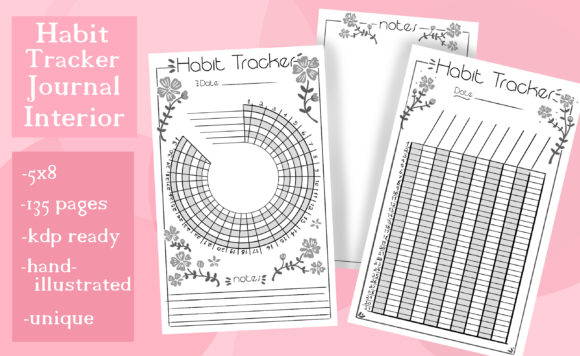
Habit Tracker Journal Interior: Designing Visual Accountability for Fitness and Personal Growth
Building consistent routines is a universal challenge that transcends demographics, affecting everyone from high-level executives optimizing their morning rituals to fitness enthusiasts attempting to maintain a new workout regimen. While the psychological desire for self-improvement is strong, the mechanical execution of habit formation often fails due to a lack of tangible feedback. This is where the strategic implementation of a Habit Tracker Journal Interior becomes essential. Unlike digital applications that can feel ephemeral or disconnected from physical action, a dedicated paper-based tracking system provides a tactile anchor for behavioral change. The specific design of the journal’s interior pages plays a critical role in whether a user abandons the practice after two weeks or sustains it for months. Effective tracking requires more than blank lines; it demands a layout that reduces friction, offers visual gratification, and accommodates the non-linear nature of human progress.
The Psychology of Visual Progress Tracking
Understanding why visual tracking works is fundamental to selecting or creating an effective journal. Behavioral psychology suggests that humans are inherently motivated by visible signs of progress. When pursuing abstract goals like "getting fit" or "being more mindful," the results are often delayed and invisible in the short term. A well-designed tracker bridges this gap by converting intangible effort into immediate, concrete data. The act of marking a completed task releases dopamine, reinforcing the behavior loop. However, standard grid layouts can sometimes induce fatigue or anxiety if they become monotonous. This necessitates variety in design.
Incorporating diverse tracking formats, such as circular and rectangular layouts, addresses the cognitive need for novelty. A rectangular grid offers linear clarity, perfect for streaks and sequential logic, while a circular format mimics natural cycles and can feel less rigid for habits that fluctuate in intensity. For fitness-based habits specifically, where energy levels and recovery times vary, a circular tracker can represent weekly volume or cyclical training phases more intuitively than a strict calendar view. This flexibility prevents the "all-or-nothing" mentality that often derails progress when a single day is missed. By providing multiple visual languages within the same Habit Tracker Journal Interior, users can match their tracking method to their current mental state and goal type.
Dual-Format Systems: Circular vs. Rectangular Tracking
The inclusion of both circular and rectangular tracking options serves distinct functional purposes that cater to different learning styles and organizational preferences. Rectangular trackers are traditionally associated with consistency and streak building. They excel at binary tracking—did I do it, or did I not? This format is ideal for foundational habits such as hydration, medication adherence, or daily reading. The linear progression creates a visual chain that users are psychologically reluctant to break, leveraging the "don't break the chain" methodology popularized by Jerry Seinfeld.
Conversely, circular trackers introduce a holistic perspective. Often divided into segments representing days of the week or percentages of completion, these layouts soften the rigidity of habit formation. For professionals managing complex projects or educators balancing teaching loads with personal wellness, a circular format can reduce the pressure of perfectionism. It allows for partial credit and emphasizes balance over unbroken streaks. In a fitness context, a circular tracker might represent total weekly activity rather than daily compliance, accommodating rest days without appearing as failures. Offering both formats within a single 135-page volume ensures that the tool remains relevant even as the user’s relationship with their habits evolves. This adaptability is a hallmark of high-quality low-content book design, moving beyond generic templates to provide genuine utility.
The Importance of Original Hand-Illustrated Art
In a marketplace saturated with AI-generated imagery and recycled stock vectors, the authenticity of a journal’s aesthetic significantly impacts user engagement. Clip art, while convenient, often lacks emotional resonance and can make a personal development tool feel impersonal or mass-produced. A Habit Tracker Journal Interior featuring unique, hand-illustrated elements creates a sense of craftsmanship and intentionality. When a user opens a journal and encounters original artwork, it signals that the space is special and worthy of their time and reflection.
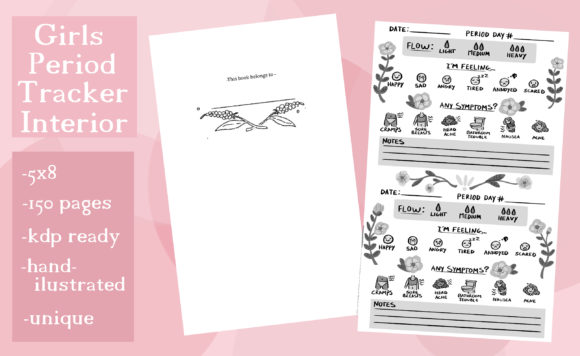
Hand-drawn illustrations also serve a functional purpose beyond decoration. They create visual landmarks that aid navigation and memory retention. Distinctive doodles and artistic borders can act as section breaks, helping users mentally transition between tracking data and reflective writing. Furthermore, original art avoids the legal and ethical gray areas associated with licensing, ensuring that creators and consumers alike are using a product with clear provenance. For KDP publishers and designers, utilizing transparent PNG files of original art allows for modular customization, enabling the creation of derivative products or marketing materials that maintain a cohesive, proprietary brand identity. This attention to artistic integrity elevates the journal from a simple utility to a curated experience.
Integrating Reflection Through Illustrated Note Pages
Data collection without analysis leads to stagnation. Tracking tells you what you did, but note pages help you understand why it worked or failed. Dedicated illustrated note pages are a critical component of sustainable habit formation. These spaces should not be treated as afterthoughts; they are the engine of insight. Prompts or open-ended illustrated areas encourage users to document barriers, celebrate small wins, and adjust strategies based on real-world feedback.
For researchers and hobbyists studying their own behaviors, these pages function as a qualitative dataset complementing the quantitative tracking. A fitness enthusiast might note that their energy dips every third week, correlating with sleep quality recorded in the tracker. An educator might realize that grading periods negatively impact their meditation streak, prompting a seasonal adjustment to their goals. The presence of art on these pages lowers the barrier to entry for journaling; a blank white page can be intimidating, but a page framed with gentle, hand-drawn foliage invites interaction. This synthesis of structure and freeform expression supports neurodivergent users and creative thinkers who may struggle with purely analytical tracking methods.
Technical Specifications for Print and Digital Adaptation
Whether you are an end-user evaluating a purchase or a creator preparing a manuscript for Amazon KDP, technical precision is non-negotiable. A beautifully designed Habit Tracker Journal Interior will fail if it does not meet printing standards. The 5×8 trim size is widely considered the optimal form factor for portable journals, striking a balance between writing surface area and bag-friendly portability. At 135 pages, the spine width is sufficient for title visibility on a shelf while remaining lightweight enough for daily carry.
Full-bleed printing is essential for illustrated interiors. Without proper bleed setup (typically extending 0.125 inches beyond the trim line), artwork risks being cropped unevenly or leaving unsightly white borders. Creators must ensure that all hand-illustrated elements and tracking grids respect safe zones to prevent content loss during binding. The availability of editable Word documents alongside print-ready PDFs adds significant value, allowing users to modify prompts, adjust dates, or rebrand the interior for niche audiences. Similarly, access to transparent PNG assets facilitates cross-platform consistency, enabling the same visual language to be applied to digital planners, social media promotion, or companion worksheets. This multi-format ecosystem maximizes the utility of the core design assets.
Practical Applications Across Diverse User Groups
The versatility of a dual-format, illustrated tracker extends far beyond personal fitness. Professionals utilize these journals to track deep work sessions, networking outreach, or skill acquisition, benefiting from the separation of work metrics from digital distractions. Educators and students use them to monitor study habits, assignment completion, and self-care routines during high-stress academic terms. The visual nature of the interior makes it accessible for younger users or those with executive function challenges who find spreadsheet-style tracking overwhelming.
Business owners and freelancers often employ these journals to separate revenue-generating activities from administrative busywork, using the circular trackers to visualize project lifecycles and rectangular grids for daily operational tasks. Researchers may use the illustrated note pages for field observations or literature review logs, appreciating the structured yet flexible layout. Hobbyists tracking gardening cycles, language learning vocabulary, or craft project milestones benefit from the non-digital permanence of ink on paper. In each case, the Habit Tracker Journal Interior serves as an externalized prefrontal cortex, offloading the cognitive burden of remembering and motivating, thereby freeing up mental resources for actual execution. The key to long-term adherence lies not in willpower alone, but in possessing a tool that respects the complexity of human behavior through thoughtful, varied, and aesthetically intentional design.