Metal Detector Log Book KDP Interior Template
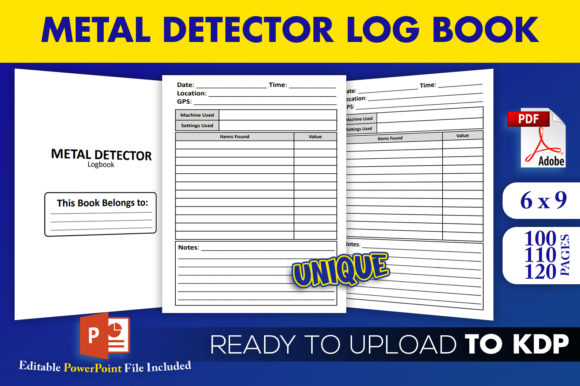
Creating a successful low-content book on Amazon requires more than just a catchy cover; the interior experience determines whether a customer leaves a five-star review or returns the product. For niche publishers targeting the treasure hunting community, a specialized Metal Detector Log Book KDP Interior serves as the functional backbone of the product. This specific template collection is engineered to bridge the gap between generic notebooks and high-value hobbyist tools. Rather than forcing creators to design complex tables from scratch, this asset provides a structured, tested foundation that respects the specific data points metal detectorists need to track, from GPS coordinates and target IDs to soil conditions and find descriptions.
The visual personality of this interior leans toward utilitarian clarity rather than decorative excess. In the realm of editorial design for field guides and logbooks, readability under less-than-ideal lighting conditions is paramount. The layout utilizes clean lines and ample white space, ensuring that users can quickly jot down notes while standing in a park or on a beach. This aesthetic aligns with modern typography principles where function dictates form. By avoiding overly ornate borders or distracting background graphics, the design maintains a professional appearance that appeals to serious hobbyists who view their logbook as a scientific record of their searches rather than a mere diary.
Strategic Applications Across Publishing and Branding
While primarily designed for KDP, the versatility of this Metal Detector Log Book KDP Interior extends into broader creative and commercial projects. For entrepreneurs building a brand identity within the outdoor recreation niche, these interiors act as a tangible extension of digital content. Bloggers and influencers who review metal detecting equipment can use these printed logs as lead magnets or merchandise, creating a cohesive ecosystem between their web design, social media graphics, and physical products. The consistent visual language helps reinforce brand recognition across different touchpoints.
From a publishing perspective, this template solves specific production challenges. Self-publishers often struggle with margin errors and bleed issues when designing tabular data. Because these files have been explicitly tested on KDP, they eliminate the guesswork associated with trim sizes and safe zones. This reliability is crucial for marketers and small business owners who need to launch products quickly without enduring multiple rounds of proofing rejections. Furthermore, the inclusion of an editable PowerPoint source file transforms this from a static product into a flexible design asset. Creators can modify headers, add their own logo design elements, or adjust column widths to create unique variations, thereby avoiding the duplicate content penalties that sometimes plague low-content book categories.
Typography and Layout Influence on User Engagement
The choice of typeface within a logbook interior significantly impacts usability and perceived value. Although we often discuss premium font choices in the context of display font or script font for covers, the body text of a logbook demands a robust sans serif font or a highly legible serif font optimized for small point sizes. In this Metal Detector Log Book KDP Interior, the typographic hierarchy is established through weight and spacing rather than size alone. Headers are distinct enough to be found at a glance, while the writing lines provide sufficient guidance without feeling restrictive. This balance influences audience engagement by reducing friction; when a user finds a logbook easy to fill out, they are more likely to complete it and purchase subsequent volumes.
Visual consistency also plays a role in brand perception. A haphazardly designed interior suggests a lack of professionalism, whereas a well-structured layout implies expertise. For content creators and crafters entering the publishing space, utilizing a professionally typeset interior elevates their status from amateur to authority. The high-resolution nature of these files ensures that text remains crisp even on standard KDP paper stock, preventing the blurry or pixelated appearance that can occur when designers upscale low-quality assets. This attention to technical detail signals to the buyer that the publisher understands both the subject matter and the medium.
Evaluating Fit and Customization Options
Selecting the right interior requires an honest assessment of your target audience’s needs. Before uploading this Metal Detector Log Book KDP Interior, consider the specific sub-niche you are serving. Are you targeting coin shooters, relic hunters, or gold prospectors? While the provided templates cover general requirements, the editable PPTX file allows for necessary customization. You might need to add specific fields for "ground balance" settings or "discrimination patterns" depending on the equipment your audience uses. Testing font pairings for any added custom text is essential; ensure that any new elements match the existing style to maintain visual harmony.
Practical evaluation should also include a review of the page count options. With 100, 110, and 120-page variations included, publishers can test different price points and spine widths. Thicker books often convey higher value and allow for larger text on the spine, which improves visibility in search results and on physical shelves. Conversely, a thinner volume might appeal to travelers or those seeking a lightweight field companion. Having multiple pre-formatted options allows for rapid A/B testing of product offerings without additional design labor.
- Editability: Verify that the PowerPoint file retains formatting when opened in different versions of Office or alternative software like Keynote.
- Margin Safety: Even though files are KDP-tested, always double-check margins if you add significant content near the gutter.
- Paper Opacity: Consider how the high-resolution line work will appear on cream versus white paper; darker lines may show through on cream paper if users write with heavy markers.
- Licensing Compliance: Review the commercial license terms to understand usage rights, especially if planning to bundle the interior with other design assets or sell modified versions.
Maximizing Value Through Technical Precision
The true advantage of this download lies in its technical readiness. The three included PDF files represent a streamlined workflow for publishers who prioritize speed and accuracy. In the competitive landscape of KDP, being first to market with a trend can define success. By removing the barrier of interior design, creators can focus their energy on keyword research, cover creation, and marketing strategies. The high-resolution interiors ensure that the final printed product meets the quality expectations of adult consumers aged 20–50, a demographic that values functionality and durability over novelty.
Furthermore, the structured nature of these pages supports better data organization for the end-user. Unlike blank journals, a dedicated logbook encourages systematic recording. This utility transforms the book from a passive object into an active tool for skill development. For marketers and bloggers, this distinction is vital for copywriting; you aren't selling paper, you are selling improved detection skills and organized records. The professional layout reinforces this promise. When integrating this Metal Detector Log Book KDP Interior into a broader business strategy, remember that the quality of the user experience directly correlates to long-term brand loyalty and organic reviews.
Ultimately, success in low-content publishing hinges on the intersection of niche relevance and production quality. This template package addresses both by providing a visually appropriate, technically sound, and customizable foundation. Whether you are a seasoned publisher expanding your catalog or a hobbyist turning passion into profit, leveraging pre-tested, high-resolution interiors minimizes risk and maximizes creative potential. The ability to adapt the source file ensures that your product remains unique in a crowded marketplace, while the standardized PDF outputs guarantee a smooth path from design to publication.