Streamlining Self-Publishing with a Customizable KDP Inventory Log Book Interior
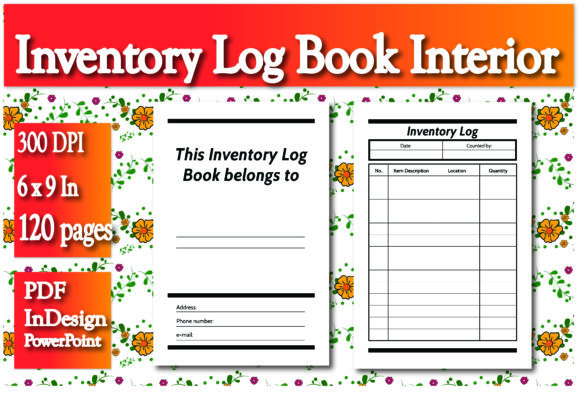
For independent publishers and authors managing multiple titles, organization is not merely a preference; it is the backbone of profitability. Tracking stock levels, royalty estimates, advertising spend, and sales velocity requires a dedicated system that goes beyond scattered spreadsheets or generic notebooks. This is where a specialized KDP Inventory Log Book Interior becomes an essential asset in your publishing workflow. Designed specifically for the 6 x 9 inch trim size, this resource bridges the gap between digital data management and tangible record-keeping, offering a structured yet flexible solution for monitoring your Amazon KDP business.
The true value of this log book lies in its versatility. Unlike static templates that force you to adapt your business to the book, this package empowers you to adapt the book to your business. By providing both Adobe InDesign and Microsoft PowerPoint source files alongside a print-ready PDF, the interior serves as a foundational tool rather than a rigid constraint. Whether you are tracking physical author copies, monitoring paperback sales across different marketplaces, or recording bulk order details, having a customizable 120-page framework ensures that every column and row serves a specific purpose in your inventory management strategy.
The Strategic Advantage of Editable Source Files
Most low-content or medium-content books on the market are sold as locked PDFs. While convenient for immediate upload, they lack longevity. Business needs evolve, and so should your tracking tools. The inclusion of an InDesign file caters to professional designers and publishers who demand typographic precision and layout control. If you need to adjust gutter margins, change font hierarchies, or add specialized tracking columns for ISBNs and ASINs, InDesign provides the industry-standard environment to do so without compromising print quality.
However, not every publisher has access to or proficiency with Adobe Creative Cloud. This is why the inclusion of a PowerPoint file is a significant practical benefit. PowerPoint acts as a universally accessible design interface, allowing users to modify text, resize tables, and alter headers with familiar tools. This democratization of design means you can update your KDP Inventory Log Book Interior seasonally or per project without additional software investment. For example, if you are launching a series of children's books and need to track illustration costs alongside inventory, you can simply edit the master slide or page template to reflect those new data points before generating a fresh PDF.
Optimizing the 6 x 9 Inch Form Factor
The 6 x 9 inch size is the gold standard for trade paperbacks and functional log books in the self-publishing ecosystem. It strikes an ideal balance between portability and usability. When dealing with inventory logs, space efficiency is critical. A smaller trim size might cramp table data, making it difficult to write legibly or read printed numbers, while a larger size becomes cumbersome to carry to warehouses, post offices, or book fairs.
This specific interior maximizes the 6 x 9 canvas by utilizing appropriate margins and safe zones tailored for KDP printing requirements. The 120-page count offers substantial utility without resulting in excessive spine width or printing costs. For inventory tracking, 120 pages typically translates to several months of daily logging or years of weekly summaries, depending on your volume. This duration aligns well with fiscal quarters and annual tax preparation cycles, making the physical book a reliable archive for financial review. Furthermore, the compact size ensures the book fits comfortably on standard shelving alongside other business reference materials, keeping your operational records organized and accessible.
Practical Applications in Modern Publishing Workflows
While digital dashboards provide real-time analytics, a physical log book fulfills distinct cognitive and operational functions that screens cannot replicate. Writing down inventory movements reinforces memory and encourages mindfulness regarding stock levels. In a hybrid workflow, the KDP Inventory Log Book Interior serves as the verification layer between your digital reports and physical reality.
- Author Copy Management: Track the receipt, storage location, and distribution of complimentary or promotional copies sent to reviewers, influencers, and event organizers.
- Return and Damage Logging: Maintain a dedicated record of returned units or damaged stock to identify patterns in shipping carriers or packaging quality.
- Event Sales Tracking: Use the log during book signings or conferences to record direct-to-consumer sales, which often operate outside immediate KDP reporting cycles.
- Advertising Correlation: Create custom sections to note ad spend dates next to inventory movement, helping to visualize the lag between marketing efforts and physical sales.
Beyond simple counting, this log book facilitates better decision-making through pattern recognition. When you physically interact with your data, you are more likely to notice anomalies, such as sudden spikes in returns or consistent stockouts during specific periods. The structured layout guides this analysis, prompting you to record not just the "how many" but also the "why" and "where." This qualitative context is often lost in automated export files but preserved in a thoughtfully designed manual log.
From Digital File to Physical Product: Production Considerations
Having a print-ready PDF is the final step in the customization process, but understanding what makes it "ready" is crucial for avoiding rejection or poor print quality. The provided PDF in this pack is pre-configured for KDP’s specific bleed and margin requirements for a 6 x 9 inch book. However, if you choose to modify the InDesign or PowerPoint files, you must maintain these technical standards.
When editing tables within the KDP Inventory Log Book Interior, ensure that line weights remain consistent and readable at print resolution. Lines thinner than 0.5pt may disappear or appear broken on standard KDP paper stock. Similarly, verify that all text remains within the safe zone, particularly near the gutter. Because this is a bound book with 120 pages, the inner margin must be sufficient to prevent content from disappearing into the binding. The original templates account for this, but aggressive resizing during customization can inadvertently push content into unsafe areas. Always utilize the previewer tool in KDP or generate a test proof to validate your modifications before committing to a full print run or listing the modified version for sale.
Enhancing Value Through Thoughtful Design
A log book is only useful if it is pleasant to use. The aesthetic and functional design of the interior directly impacts user compliance. If a layout is cluttered, confusing, or visually fatiguing, it will be abandoned. This interior package prioritizes clean lines, adequate white space, and logical information hierarchy. Headers are distinct from data entry fields, and rows are spaced to accommodate handwriting without feeling wasteful.
Customization allows you to enhance this usability further based on your specific niche. Publishers focusing on color interiors for children's books might add color-coding keys to their inventory logs. Those managing large backlists might include index pages or quarterly summary spreads. The ability to manipulate the source files means you can create a proprietary tracking system that adds unique value to your own operations or, if you are selling this as a digital product, to your customers' experiences. In a marketplace saturated with generic trackers, a KDP Inventory Log Book Interior that solves specific pain points through intelligent design stands out as a professional-grade tool.
Ultimately, effective inventory management is about reducing friction. By combining the immediate utility of a ready-to-upload PDF with the long-term flexibility of editable source files, this 120-page, 6 x 9 inch resource adapts to the dynamic nature of self-publishing. It acknowledges that while data lives in the cloud, the business of publishing is still very much a hands-on endeavor requiring reliable, tangible tools to keep operations running smoothly.