Mileage Log Book - KDP Interior: Evaluation and Usage Guide
Selecting the right low-content book interior is a critical step for self-publishers targeting the vehicle tracking niche. The Mileage Log Book - KDP Interior serves as a pre-formatted template designed specifically for Amazon Kindle Direct Publishing. This resource provides a structured layout for recording business and personal travel, eliminating the need for creators to design complex tables from scratch. When evaluating this asset, it is essential to understand its technical specifications, customization potential, and market fit to determine if it aligns with specific publishing goals.
Understanding the Product Specifications
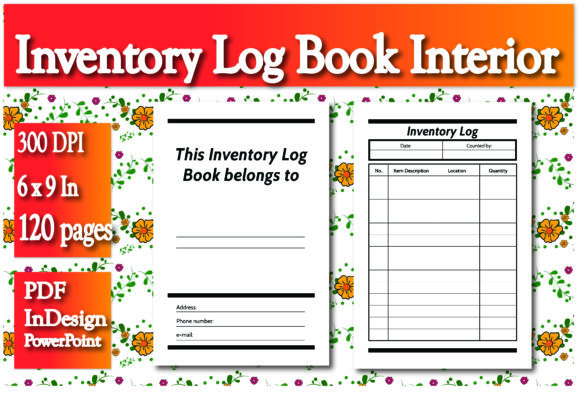
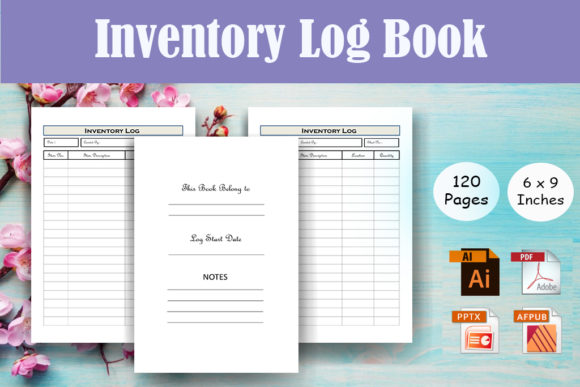
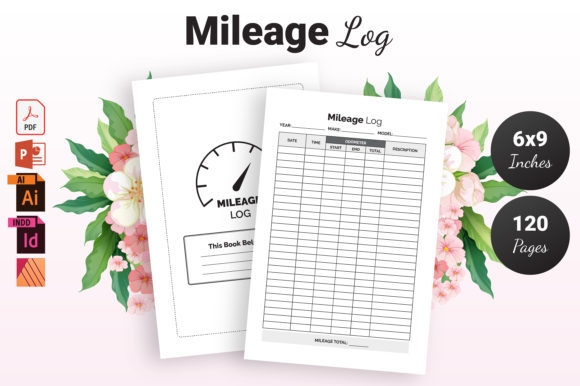
The utility of any KDP interior relies heavily on adherence to platform standards. This Mileage Log Book - KDP Interior is configured with precise dimensions of 6 x 9 inches, which is widely considered the industry standard for portable logbooks. This trim size offers a balance between writing space and portability, making it suitable for glove compartments or carrying bags. The file includes 120 pages, providing sufficient capacity for several months of tracking without resulting in an excessively thick spine that might deter buyers looking for a lightweight tool.
A defining technical characteristic of this interior is the "No Bleed" setting. For publishers new to KDP, understanding bleed is vital. No bleed means all content, including borders and table lines, stays within the safe margin area and does not extend to the edge of the paper. This specification simplifies the upload process and reduces the risk of rejection due to formatting errors. However, it also dictates the aesthetic outcome; users should expect clean margins rather than full-page edge-to-edge graphics. The package delivers high-quality print-ready PDF files alongside source files in PowerPoint (PPTX), Adobe Illustrator (AI), Adobe InDesign (INDD), and Affinity Publisher formats.
Evaluating Customization Capabilities
The primary value proposition of acquiring source files rather than a static PDF lies in customization. While the print-ready PDF allows for immediate upload, the editable files enable differentiation in a saturated market. Publishers can modify headers, adjust column widths, add branding elements, or change fonts to create a unique product. The inclusion of multiple format options caters to different skill sets and software access levels.
- Adobe InDesign and Illustrator: These are professional-grade tools ideal for precise typographic adjustments and vector-based layout changes. They offer the highest level of control for users experienced in print design.
- Affinity Publisher: A cost-effective alternative to Adobe products that supports professional layout editing. This format makes customization accessible to publishers who do not subscribe to Creative Cloud.
- PowerPoint (PPTX): This format lowers the barrier to entry significantly. While less robust for professional typesetting, it allows basic text edits and image swaps for users without graphic design training.
When evaluating these files, users must assess their own proficiency. Possessing an INDD file offers no advantage if the user lacks the software or knowledge to utilize it effectively. Conversely, relying solely on PPTX may limit advanced layout modifications. The decision to purchase should weigh the availability of compatible software against the desired level of product uniqueness.
Benefits and Practical Advantages
Time efficiency remains the most significant benefit. Designing a functional mileage log requires calculating gutter margins, ensuring consistent alignment across 120 pages, and verifying print safety zones. This pre-made interior resolves those technical challenges instantly. For publishers managing multiple titles, this acceleration allows for faster iteration and testing of different cover designs or keywords.
Furthermore, the structured nature of the Mileage Log Book - KDP Interior ensures functional usability for the end customer. Logs typically include fields for date, destination, purpose, starting odometer reading, ending odometer reading, and total miles. A professionally formatted template ensures these columns are legible and spaced appropriately for handwriting, which is a common pain point in amateur designs where rows are often too narrow or text is too small.
Tradeoffs and Considerations
Despite the convenience, there are inherent tradeoffs to using pre-made interiors. The most notable is the lack of exclusivity. Unless the license explicitly states otherwise, other publishers may have access to the same base template. This can lead to duplicate content issues or market saturation where multiple books share identical internal layouts. To mitigate this, substantial modification is recommended rather than optional. Changing the title page, adding instructional content, or altering the table structure helps distinguish the final product.
Another consideration is the rigidity of the "No Bleed" specification. While safer for printing, it limits design creativity. Publishers aiming for a premium look with colored backgrounds extending to the page edge will find this template unsuitable. Additionally, the 6x9 dimension, while standard, may not serve every niche. Users targeting commercial truck drivers might require larger formats like 8.5 x 11 inches for more detailed logging, rendering this specific interior inadequate for that sub-niche.
Determining Market Fit and Use Cases
This Mileage Log Book - KDP Interior is particularly well-suited for specific scenarios. It is an strong fit for publishers building a catalog of business-related low-content books, such as expense trackers, invoice logs, or small business ledgers. The neutral, functional design adapts easily to these adjacent niches with minor text changes. It is also appropriate for beginners testing the mileage log category who want to validate demand before investing in custom design services.
The template also serves educational or organizational purposes outside of commercial publishing. Small business owners or freelancers might use the source files to create proprietary internal tracking tools rather than selling them on Amazon. In this context, the ability to customize fields to match specific company workflows adds significant operational value beyond the KDP ecosystem.
When to Consider Alternatives
While versatile, this interior is not a universal solution. Publishers focusing on highly specialized vehicle tracking should evaluate alternatives. For example, electric vehicle (EV) owners often need to track charging sessions, battery percentage, and energy consumption alongside mileage. A standard gas-vehicle logbook lacks these fields. Similarly, maintenance logs require different data points than mileage logs. If the target audience requires hybrid functionality, a dedicated maintenance tracker or a custom-designed EV log would be superior choices.
Additionally, publishers aiming for the high-end gift market may find standard black-and-white interiors insufficient. Premium journals often feature thicker paper, color interiors, or hardcover binding options that exceed standard KDP low-content parameters. If the business model relies on higher price points and perceived luxury, investing in bespoke design or premium printing partners may yield better returns than utilizing a mass-market template.
Making an Informed Decision
Evaluating the Mileage Log Book - KDP Interior requires balancing convenience against distinctiveness. The provision of PDF, PPTX, AI, INDD, and Affinity Publisher files offers comprehensive flexibility for various technical skill levels. The 6x9 inch, 120-page, no-bleed configuration meets core KDP requirements safely and efficiently. However, success depends on how the user leverages these assets.
Potential users should audit their current software capabilities and long-term publishing strategy before acquisition. If the goal is rapid deployment of a functional baseline product, this interior meets expectations. If the goal is brand building through unique intellectual property, the source files provide a necessary foundation but require significant creative input to achieve differentiation. Ultimately, this resource functions best as a starting point for development rather than a finished solution, serving as a practical tool for publishers who understand that value in low-content publishing stems from strategic adaptation rather than passive uploading.