KDP Interior - Fishing Journal: Streamlining Low-Content Book Creation
Creating a profitable low-content book on Amazon KDP requires more than just uploading a generic template; it demands a product that offers genuine utility and visual appeal to a specific niche. The KDP Interior - Fishing Journal serves as a foundational asset for publishers, designers, and entrepreneurs looking to enter the outdoor recreation market without starting from scratch. This resource is not merely a static PDF but a comprehensive ecosystem of editable source files designed to integrate seamlessly into your existing publishing workflow. By providing PowerPoint, Word, and Excel templates alongside a print-ready PDF, this journal bridges the gap between rapid deployment and deep customization, allowing you to maintain high production standards while significantly reducing development time.
The Role of Editable Source Files in Publishing Workflows
In the competitive landscape of KDP publishing, differentiation is the primary driver of sales. Many creators struggle because they are locked into rigid PDF templates that prevent meaningful modification. The inclusion of native source files transforms the KDP Interior - Fishing Journal from a finished product into a flexible design framework. For professionals and hobbyists alike, access to PowerPoint, Word, and Excel formats means you can adapt the interior to match a specific brand identity or sub-niche requirement without needing advanced graphic design software like Adobe InDesign.
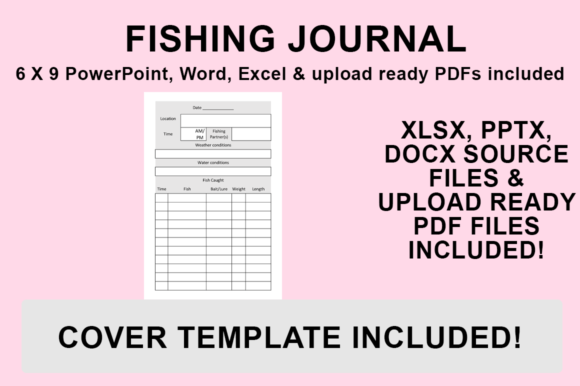
This multi-format approach supports various stages of the creative process. During the initial planning phase, the Excel file allows for structural adjustments to data tracking tables, such as modifying columns for specific fish species, weather conditions, or gear used. This ensures the journal’s functionality aligns with the actual needs of anglers rather than offering generic placeholders. As you move into the design and branding phase, the PowerPoint and Word files enable typography changes, logo placement, and the integration of custom graphics. This level of control is essential for creators who want to build a recognizable series or cross-promote other outdoor products within the journal's pages.
Strategic Customization Before, During, and After Publication
Effective use of this journal template extends beyond simple formatting. It functions as a strategic tool throughout the lifecycle of your publishing business. Before you begin designing, the template acts as a market research validator. By reviewing the pre-structured layouts, you can identify gaps in current market offerings and adjust the content to address specific user pain points, such as adding sections for catch-and-release regulations or lunar phase tracking.
During the active creation phase, the modular nature of the files supports iterative testing. You might create three different cover and interior combinations using the same base assets to test which aesthetic resonates best with your target audience. Because the files are separated by function—data in Excel, layout in PowerPoint, text-heavy content in Word—you can update one element without disrupting the entire document structure. This modularity is crucial for maintaining efficiency when managing multiple SKUs or updating older titles based on customer feedback.
Post-publication, these source files remain valuable assets for long-term portfolio management. If Amazon updates its printing specifications or if you decide to expand the journal into a spiral-bound format via a different printer, having the original source files eliminates the need to reverse-engineer your own book. You retain full ownership and adaptability of the asset, ensuring your business remains resilient against platform changes or shifting design trends.
Technical Specifications and Print Readiness
Understanding the technical parameters of the KDP Interior - Fishing Journal is critical for avoiding costly proofing errors and publication delays. All included files are engineered specifically for the 6″x9″ trim size with NO BLEED settings. This specification is intentional and practical for this niche. Fishing journals often contain intricate line work, tables, and text fields that require precise margins. A no-bleed design ensures that critical content remains safely within the printable area, reducing the risk of trimming errors that could render tracking tables unusable.
For publishers integrating this journal into a broader catalog, the 6″x9″ form factor offers excellent compatibility with standard shipping and storage logistics. It is large enough to provide ample writing space for detailed logs yet compact enough for field use. When combining this PDF with other files you may already own, such as custom intro pages, disclaimer sections, or additional activity sheets, the consistent sizing ensures a seamless binding experience. Always verify that any external assets you merge share the same trim size and margin settings to prevent alignment issues during the KDP preview process.
Workflow Integration: Exporting for KDP Upload
The transition from an editable workspace to a final upload-ready asset must be handled with precision to preserve formatting and font embedding. While the package includes a pre-made PDF, creating your own customized version requires a standardized export protocol. Following a consistent export routine ensures that your modifications translate correctly to the printed page.
- Finalize Modifications: Open your desired source file (PowerPoint, Word, or Excel) and complete all edits. This includes changing fonts, adjusting table structures, inserting custom graphics, and verifying that all placeholder text has been replaced or removed. Ensure your styling choices meet accessibility standards and remain legible in grayscale print.
- Initiate Save Protocol: Navigate to the ‘File’ menu and select ‘Save As’. Avoid using ‘Export’ or ‘Print to PDF’ options unless necessary, as ‘Save As’ typically handles metadata and font embedding more reliably for KDP requirements.
- Define Storage Location: Choose a dedicated project folder for your output. Maintaining organized file architecture prevents version control confusion, especially when managing multiple iterations of the same journal title.
- Select Correct Format: From the ‘Save as type’ dropdown menu, explicitly select PDF (.pdf). Do not save as a .docx or .pptx for upload, as KDP requires a fixed-layout PDF to guarantee print consistency across different devices and facilities.
- Execute and Verify: Click Save. Once generated, open the new PDF file to conduct a final quality check. Confirm that fonts have embedded correctly, images are high-resolution (300 DPI), and margins align with the no-bleed safety zone before uploading to KDP.
Enhancing Value Through Design and Usability
To ensure your fishing journal stands out in a saturated marketplace, leverage the editing capabilities to enhance usability and perceived value. Standard templates often lack the specific contextual cues that make a journal truly helpful. Using the PowerPoint or Word source files, consider adding instructional headers or tips at the bottom of log pages. For example, a brief guide on identifying local fish species or a knot-tying reference chart adds educational value that justifies a higher price point and encourages positive reviews.
Typography plays a significant role in both aesthetics and functionality. While the template provides a solid baseline, selecting fonts that reflect the rugged, outdoor nature of the niche can improve user engagement. However, prioritize readability over decoration. Field journals are often used in low-light conditions or while wearing polarized sunglasses; high-contrast text and clean sans-serif fonts for data entry fields reduce eye strain and improve the user experience. Test your font choices by printing a sample page at home before finalizing the digital file.
Graphics should serve a functional purpose rather than mere decoration. Use the editable files to incorporate vector-based icons for weather conditions, wind direction, or bait types. These visual elements allow users to log information quickly without excessive writing, making the journal more practical for active use. Since the files support graphic insertion, you can also add branded watermarks or subtle background textures that reinforce your publishing imprint without interfering with writability. Remember that heavy ink coverage can increase printing costs and bleed-through risks; keep background elements light and sparse to maintain optimal print quality.
Quality Control and Long-Term Asset Management
Integrating the KDP Interior - Fishing Journal into your business operations requires a commitment to quality control. Treat the source files as master assets that require protection and versioning. When you make significant improvements based on customer feedback or market analysis, save them as distinct versions rather than overwriting the original. This practice creates a library of proven layouts that can be repurposed for future projects, such as hunting journals, birdwatching logs, or camping planners.
Compatibility checks are equally important. Software updates to Microsoft Office can occasionally alter spacing or font rendering. Periodically re-export your master PDFs to ensure they still meet KDP’s current technical standards. If you collaborate with virtual assistants or freelance designers, provide them with the specific source file relevant to their task rather than the entire package. This minimizes the risk of accidental modifications to unrelated components and streamlines the delegation process.
Ultimately, the value of this journal template lies in its ability to systematize creativity. It removes the technical friction of book formatting, allowing you to focus on market positioning, keyword research, and audience building. By treating the KDP Interior - Fishing Journal as a dynamic component of your publishing infrastructure rather than a disposable commodity, you build a sustainable workflow that supports consistent output and long-term growth in the low-content book category.